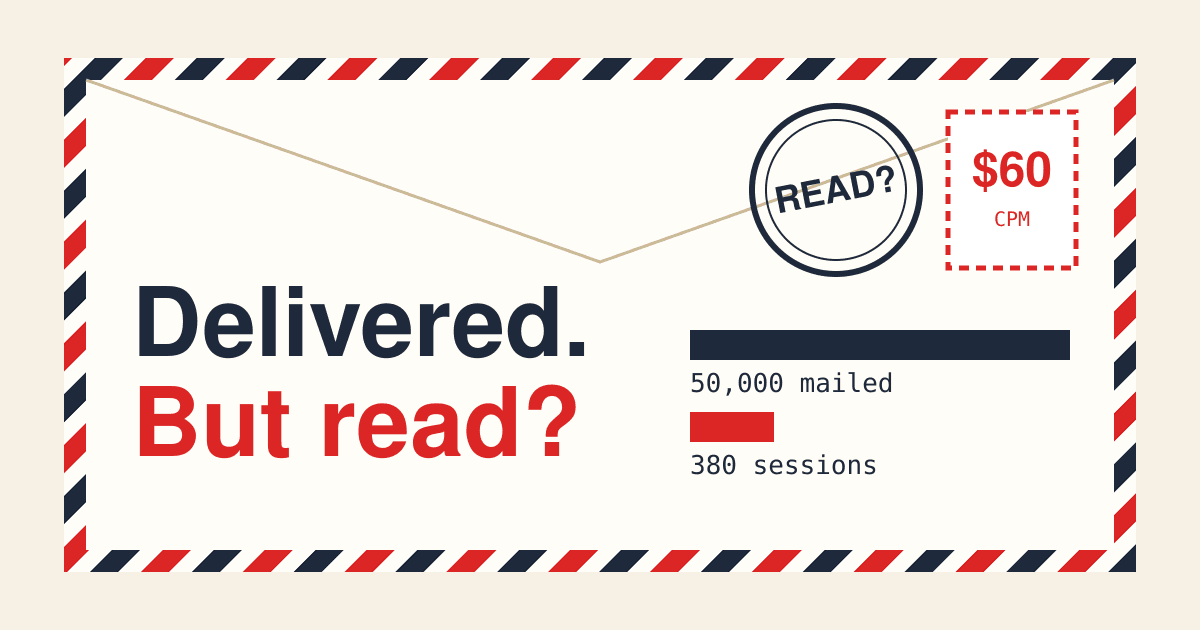
A mail carrier can prove a letter reached the box, not that anyone read it, and the open count on a rate card now has the same blind spot.
The short answer
Judge a newsletter sponsorship by its cost per verified click, whatever form the quote takes. Expect $25 to $60 per 1,000 for marketing lists and $80 to $180 for finance, then ask for filtered clicks on the last five sponsor links, and convert the quote into a cost per session before you book. Buy one slot as a test, and only then a package.
- 76.56% of opens Litmus logged in September 2026 were Apple opens, the group its report does not count as reliable once Mail Privacy Protection is on.
- 82.4% of newsletter clicks on Omeda's platform in Q1 2026 were not human.
- 2.5x is the price gap between a $60 CPM on sends and on opens, at a 40% open rate.
What does a newsletter sponsorship cost?
A sponsorship usually costs $10 to $200 per 1,000, on opens or sends depending on the seller, and the audience sets the price more than the list size does. An 8,000-subscriber list of CFOs can outearn a 50,000-subscriber lifestyle list. All three price sets below come from sellers and brokers, not an audit, so treat them as what you will be quoted, not what a slot is worth.
| List | Dupple, direct | InboxBanner | SponsorScouter |
|---|---|---|---|
| Finance, investing | $80-$180 | $35-$80 | $70-$180 |
| B2B software | $100-$150 | $40-$100 | $80-$200 |
| Marketing | $25-$60 | $25-$60 | $50-$120 |
| Lifestyle | $15-$40 | $15-$40 | $15-$40 |
| General news | Not listed | $10-$30 | Not listed |
Sources: Dupple, InboxBanner, SponsorScouter. The InboxBanner row for B2B software is its tech and developer range.
The classes of postage
Where the ad sits changes both the price and the clicks. The multipliers are SponsorScouter's guide for sellers, and the click ranges come from InboxBanner's platform data.
- First class: top slot. 1.3 to 1.5 times the base rate. 3.5% to 4.5% click rate.
- Standard: mid-issue. 1.0 times the base rate. 2% to 3% click rate.
- Postcard: classified or footer line. 0.5 to 0.7 times the base rate. 0.8% to 1.5% click rate, footer.
- Express: dedicated send. 2 times or more. The whole issue is yours.
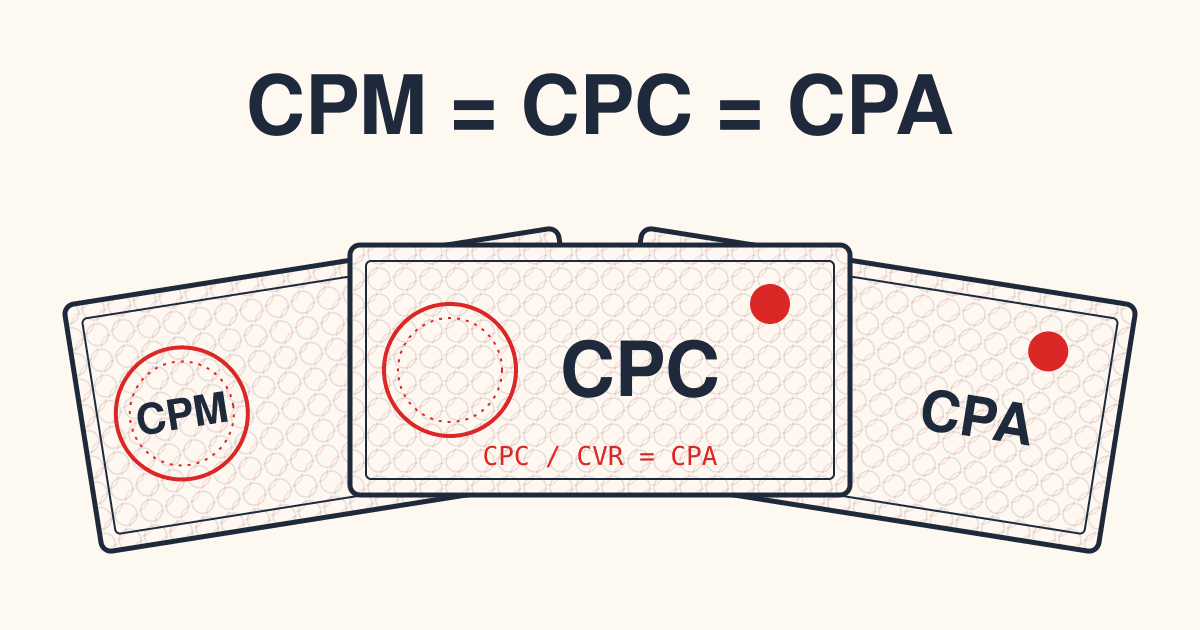
Most lists under 50,000 quote a flat fee of $300 to $5,000. A flat fee is easy to agree and hard to compare, so convert it into a CPM, CPC and CPA before you weigh two lists against each other.
Why can't you trust the open rate?
Apple Mail loads images for its privacy users whether or not they read, so an open no longer proves a reader. Apple says Mail Privacy Protection "prevents senders from seeing if you've opened the email message". MailerLite puts the effect plainly: real open rates are lower than dashboards show.
That sample comes from Litmus customers, so your list will differ, but the direction holds: the group that cannot be read is the largest one. The median open rate in MailerLite data is 43.46%, with media at 42.97% and publishing companies at 34.24%. Any of those can be a fine list or a sleeping one, and the number alone will not tell you which.
Use opens for one job only: as the base for a price the seller quotes. Do not use them as proof of attention.
How many newsletter clicks are real?
Fewer than the report shows, and how many fewer depends on where the list reads its mail. Security tools at companies scan links before a message arrives, and those scans can register as clicks.
- 82.4%of newsletter clicks non-human, Omeda, Q1 2026
- 56%of 105 million newsletter clicks artificial, GlueLetter, as reported by Omeda
- 1 in 5clicks bots with basic detection, close to 50% with third-party data, Mailchimp testing
The three figures disagree because they measure different lists with different filters. Omeda's customers lean toward business media, whose readers sit behind corporate gateways, so its number sits at the high end. The domain split explains the rest: GlueLetter found 6% to 7% artificial clicks on Gmail and Yahoo addresses, against 80% on .edu, 85% on .gov and 93% on .org.
The practical reading: a raw click count from a consumer list may be close to true, and one from a list of company addresses may be mostly machines. Omeda also warns that a simple rule such as "drop every click within five seconds" fails both ways, because scanners return days later and some people tap fast. Ask how the filter works, not only whether there is one.
What should you ask before you book?
Six questions, sent by email before any money moves. A seller with a healthy list answers them in a day, usually from a dashboard.
-
Is the CPM on sends or on opens?
A good reply: "On opens, trailing 30 days, and here is the count."
Sellers use both. SponsorScouter prices per 1,000 opens and Dupple describes CPM on sends. On a 50,000 list with 40% reported opens, a $60 CPM is $3,000 on sends and $1,200 on opens, a gap of 2.5 times for the same words on a rate card.
-
How many unique clicks did the last five sponsors get, on the sponsor link alone?
A good reply: Five numbers from five sends, with the placement named.
An average across every link in the issue flatters the ad, because readers click editorial links more. Ask for sponsor links only, and for the same slot you are buying.
-
Are those clicks filtered for bots, and how?
A good reply: The filter named, and raw and filtered counts side by side.
A publisher that can show both knows the size of its own problem. "Our platform handles it" is the answer to press on: ask what the filtered count was, not whether one exists.
-
What share of the list uses company or institutional addresses?
A good reply: A split such as 60% personal, 35% company, 5% .edu or .gov.
This tells you how much bot traffic to expect before you see a report. A list of corporate readers is often the one you want, and also the one with the most scanner clicks, so judge it on filtered numbers.
-
What share of the list arrived through paid growth in the last six months?
A good reply: A percentage, and the channel it came from.
Paid recommendation networks sell subscribers at about $0.50 to $3 each, per Dupple. That is a normal way to grow, but a list that doubled this way last quarter has not yet shown you how it reads.
-
What is the spam rate in Google Postmaster Tools?
A good reply: A screenshot under 0.3%, the ceiling Google sets.
Google asks every sender to stay below 0.3%, and anyone sending over 5,000 messages a day to Gmail must also publish DMARC. A list that drifts over the line risks the spam folder, and your ad goes with it.
What does the quote really buy?
Take a primary slot at a flat $1,800 on a 50,000-subscriber list. Every number here is made up to show the method, and the 8% signup rate is the low end of InboxBanner's 8% to 15% range. Same invoice, six prices:
- 50,000 Letters mailed $36.00 per 1,000 What the rate card leads with. Says nothing about readers.
- 21,000 Reported opens $85.71 per 1,000 A 42% open rate. Machine loads count here.
- 630 Reported clicks $2.86 each Unique clicks on the sponsor link, before filtering.
- 440 Clicks after bot filter $4.09 each What the publisher can defend.
- 380 Sessions in your GA4 $4.74 each The first number you measured yourself.
- 30 Signups $60.00 each At 8%, the low end of the published range.
The cost per reported click looks like a bargain at $2.86. The buy is really $4.74 a session and $60 a signup. Compare those last two with your other channels, using your own click-to-sale rate, and ignore the first three boxes.
Run the test buy in five steps
- Book one mid-issue slot, the base rate, so the test is cheap and easy to compare.
- Give the list its own link with UTM tags that land in the right GA4 channel.
- Send clicks to a page made for that list, and add a code unique to it.
- Add "How did you hear about us?" to the signup form. It catches readers who come back later with no tag.
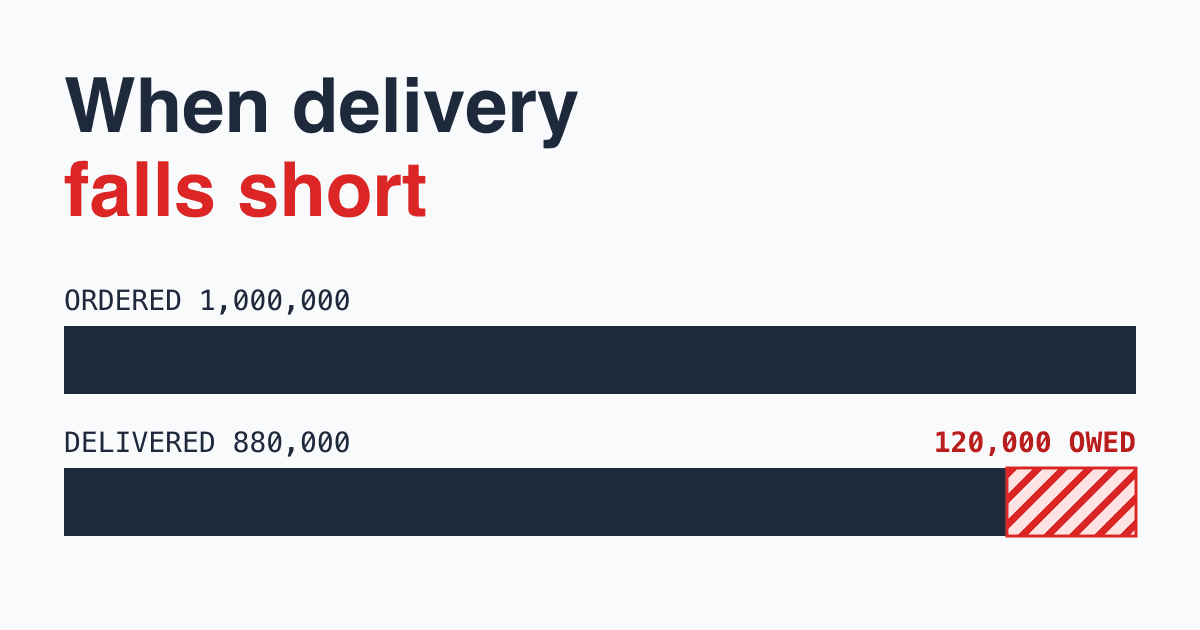
- Write the delivery terms and any makegood into the insertion order before the send date.
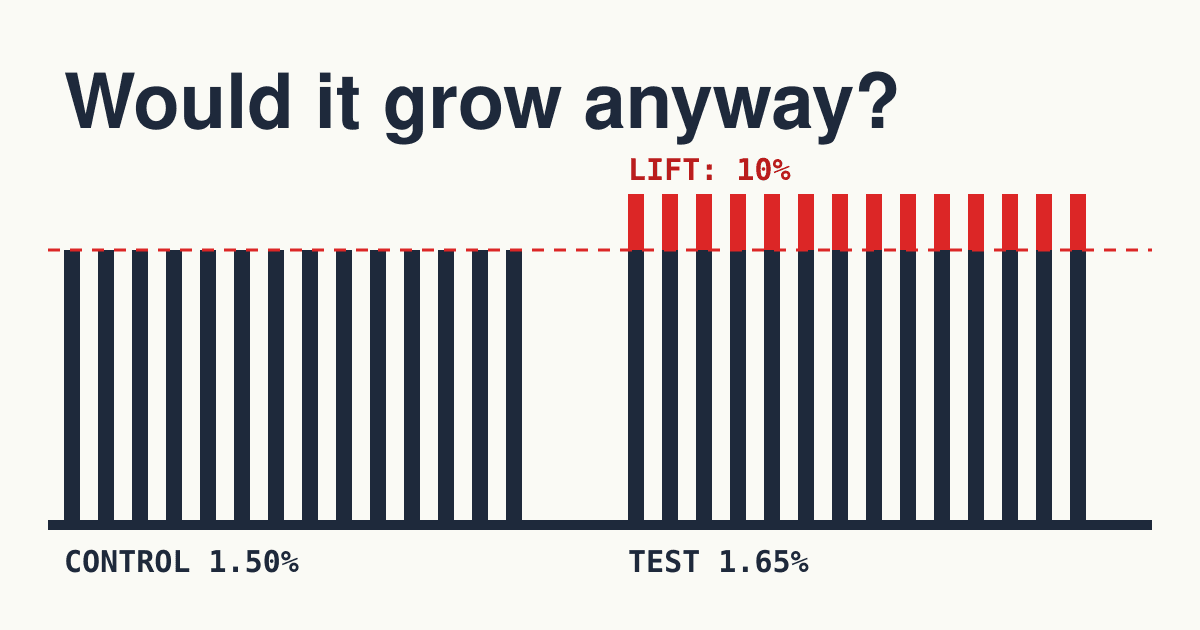
To learn whether the sales would have come anyway, run a holdout once the spend is big enough to justify one.
Which replies should send the deal back?
None of these alone ends a deal. Two together do.
The media kit quotes opens and nothing else
No click history means no evidence of what a sponsor received. The seller may simply be new, so ask for one test slot at a lower rate, in place of a three-pack.
Total subscribers, with no active count
Ask how many subscribers have clicked anything in the last 90 days. Clicks are imperfect, but the question separates a kept list from an old one.
Screenshots stop short of the date or the send name
A cropped figure cannot be matched to an issue. Ask for the dashboard view of two named sends, or a read-only share.
A click rate far above the rest of the market with no filter named
The median email click rate is 2.09% in MailerLite data and 4.1% for media senders. A 15% rate from a work-address list usually means scanners, not fans.
No sponsor label in past issues
Read three back issues. An ad that is not marked as paid is a legal risk for both of you, and the disclosure label guide says what to require.
Questions buyers ask
How much does a sponsorship cost in a 10,000-subscriber newsletter?
At a 40% reported open rate, that is 4,000 opens. A $30 to $60 CPM gives $120 to $240 for a mid-issue slot. Small niche lists often quote flat fees above that: Dupple puts lists under 50,000 at $300 to $5,000 a send, and SponsorScouter suggests sellers set a $250 floor.
Is a flat fee better than CPM or CPC?
Take the flat fee when you want a specific list, then convert it into a cost per verified click yourself. CPM suits larger lists and repeat buying. CPC shifts the risk to the seller, so most newsletters refuse it, and Dupple calls it rare.
What is a good click-through rate on a newsletter ad?
InboxBanner reports 2.2% across placements, 3.5% to 4.5% for top slots in engaged lists, 2% to 3% mid-issue and 0.8% to 1.5% in the footer. These are platform figures that may include bot clicks, so use them to spot an outlier and judge the buy on sessions.
Should I buy one send or a package?
Buy one slot first. If the cost per session clears your target, book three: Dupple reports 25% to 35% off a single-send rate for three sends in a quarter, and 15% to 30% off in July, August and January.
How long should a test run before I judge it?
Allow about a week for most clicks to land, then count signups over the sales cycle you already use. One send is enough to catch a bad list, and rarely enough to prove a good one, so repeat before you scale.
Sources
- Litmus, Email Client Market Share, September 2026
- Apple, Use Mail Privacy Protection on iPhone
- MailerLite, Email marketing benchmarks, December 2024 to November 2025, 3.6 million campaigns
- Omeda, Bot clicks in email, Q1 2026, 1.77 billion emails, with GlueLetter figures
- Mailchimp, How to detect bot clicks in email marketing
- Google, Email sender guidelines
- Dupple, Advertising in newsletters, May 2026 rates
- InboxBanner, Newsletter advertising benchmarks 2026
- SponsorScouter, Newsletter advertising pricing guide, 2026